
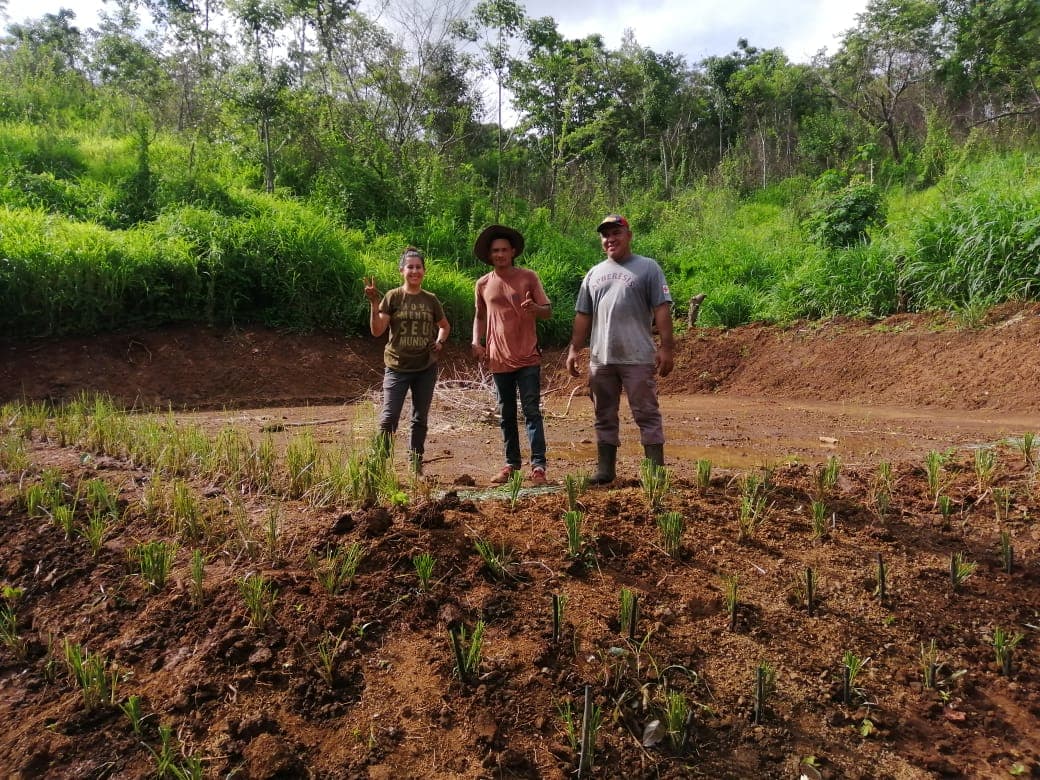
Fertilizer is most valuable when it stays in the field long enough to help a crop. When prices rise, every kilogram of soil and nutrient carried away by runoff becomes more costly for the farmer who paid for it.
That is not a distant concern. The World Bank reports that fertilizer prices rose 35% year over year in the first five months of 2026, adding pressure to food systems already exposed to disrupted supply chains and high energy costs. World Bank Food Security Update
For a well-capitalized farm, a price shock can be painful. For a smallholder operating close to the margin, it can mean applying less fertilizer, taking on debt, or accepting a weaker harvest. The response cannot be limited to finding the next shipment of inputs. It must also include helping fields lose less of the soil, water and fertility they already have.
In one minute: fertilizer access matters. So do the field conditions that determine whether rain carries part of that investment downhill. Vetiver hedgerows are one practical tool to slow runoff and trap sediment when they are designed for the site and managed alongside sound agronomy.
The hidden cost of runoff
Rainfall is essential to agriculture, but rain moving quickly over bare, compacted or sloping ground can carry sediment and nutrients away. The loss is often gradual rather than dramatic: a little more erosion after each rainy season, a little less topsoil, and more money needed to maintain productivity.
This is why fertilizer security is not only a market question. It is also a field-design question. Farmers need reliable access to inputs, but they also need ways to keep water, organic matter and nutrients in the productive part of the field.
What a vetiver hedge can do
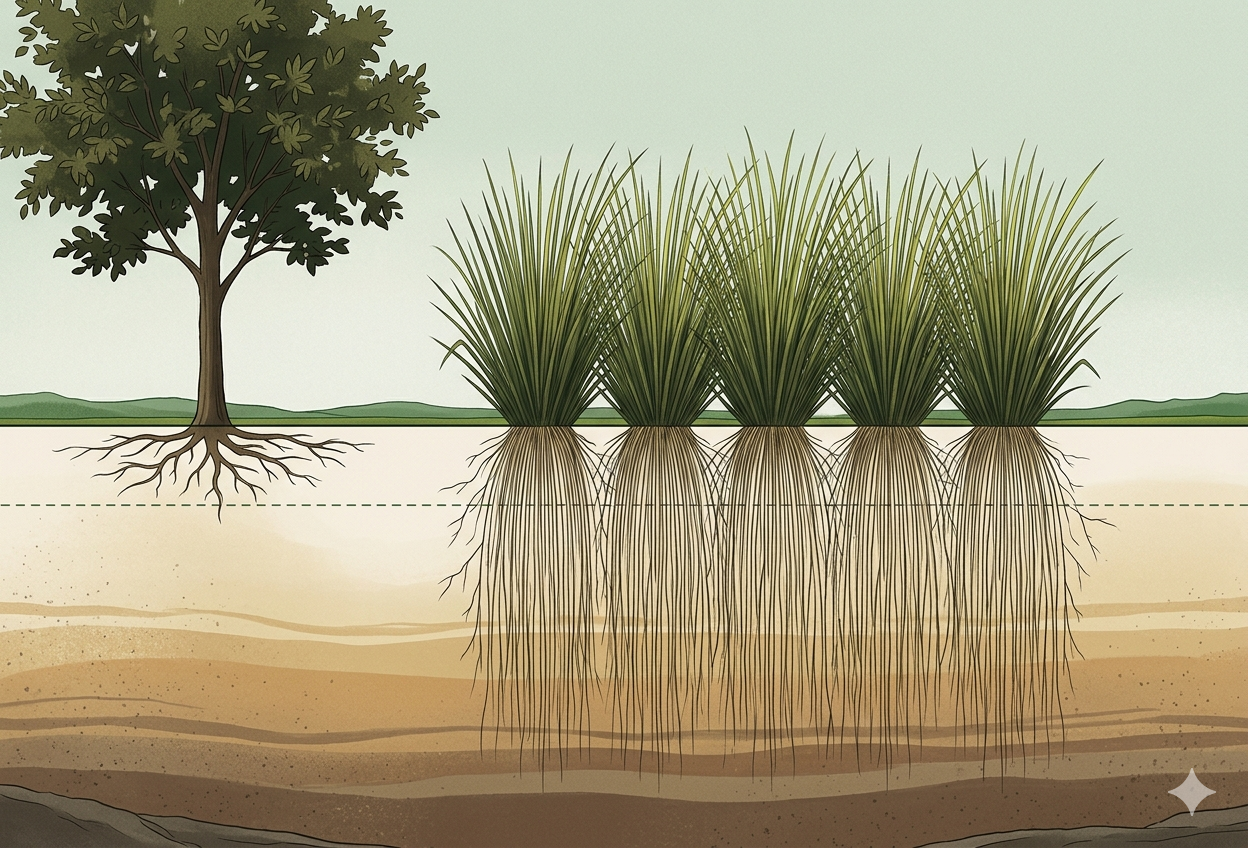
Vetiver (Chrysopogon zizanioides) is a perennial grass used in soil and water conservation. When planted in dense, properly located hedgerows, its stiff stems can slow surface runoff and trap sediment. Its deep root system can help reinforce soil.
The outcome depends on the site: slope, soil, rainfall pattern, planting layout, establishment care and the surrounding farm system all matter. Vetiver is not a replacement for fertilizer, compost, drainage, crop planning, extension support or farmer knowledge. It is a living field measure that can complement them.
Research on fertilized sloping farmland has found that vetiver hedgerows can reduce nitrogen and phosphorus losses while maintaining crop yield in the studied conditions. Science of the Total Environment That does not justify promising the same result for every farm. It does support a practical principle: when a field slows water and retains sediment, costly inputs have a better chance of remaining where they are needed.
From price shock to field resilience
The current fertilizer squeeze has renewed attention on access, logistics and subsidy policy. Those responses matter. The World Bank’s 2026 commodity outlook also identifies energy and fertilizer costs as a continuing source of risk. World Bank Commodity Markets
But resilience is strongest when it has more than one layer:
- Access: farmers can obtain appropriate inputs and advice.
- Protection: fields limit unnecessary loss of soil, water and nutrients.
- Local capacity: communities can establish, maintain and adapt practical measures to their conditions.
Vetiver belongs in the protection layer. A contour hedge will not solve a broken supply chain. It can, however, help make scarce inputs work harder by protecting the physical base of farming.
A practical question for partners
Before recommending any intervention, start with the field: Where does water move during heavy rain? Where is soil leaving the site? Which areas are steep, bare or compacted? What can the farmer realistically maintain?
Those questions prevent a common mistake: treating a plant as a slogan instead of a designed system. A useful vetiver intervention is specific about its purpose, its limits and the evidence needed to judge it.
Learn the system before you plant
VSF works with communities and partners on practical, context-specific vetiver systems for soil protection and water management. Explore the Vetiver System and contact VSF when you want to discuss a field situation, partnership or learning need.