
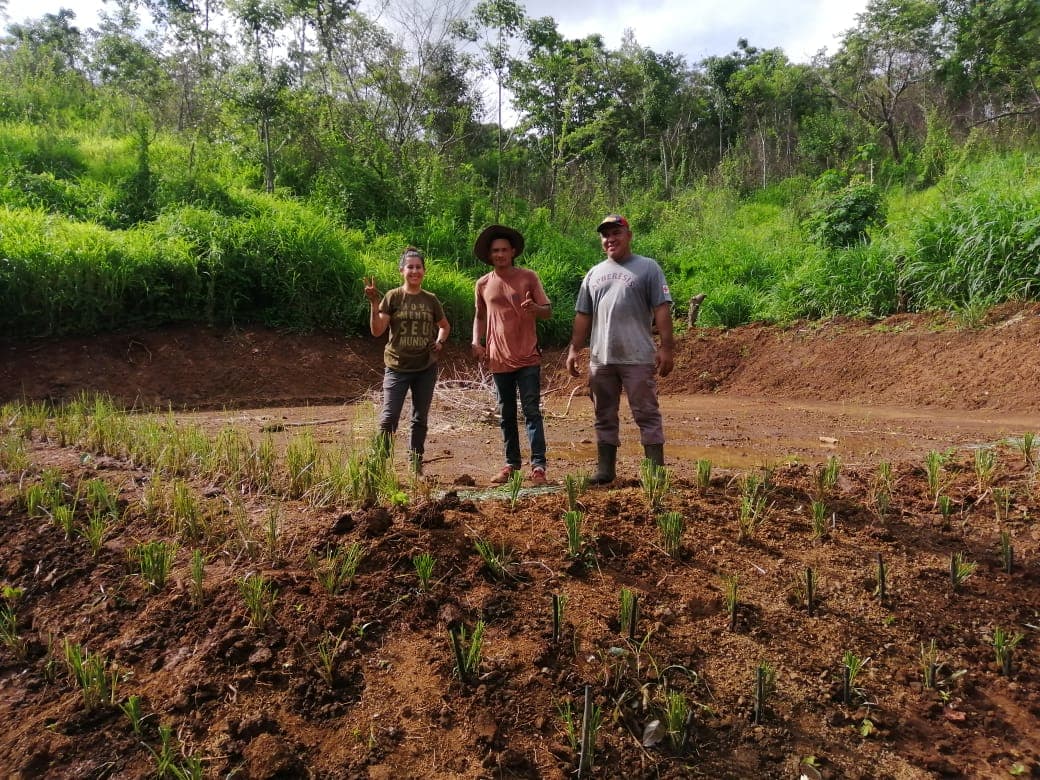
Vetiver for erosion control
Vetiver can help manage surface erosion when it is planted as a dense, continuous hedge across the direction of runoff. The hedge slows water, spreads its flow, and catches sediment moving across the ground. Over time, the protected side of the hedge can begin to retain soil.
This is a field method, not a universal promise. Results depend on the slope, soil, rainfall, spacing, planting quality, and first-year care.
Where it can help
Vetiver hedgerows are commonly considered for cultivated slopes, field edges, gullies in early recovery, road embankments, drainage margins, and other places where surface runoff is carrying soil away.
Before planting, identify where water starts, where it concentrates, and what lies downhill. A hedge placed without reading the site can create gaps or move water to the wrong place.
How the hedge works
The system relies on a narrow row of closely spaced plants, not on isolated clumps. Once established, the hedge acts as a living filter: water can pass through it more slowly while sediment is trapped. Its deep, mostly vertical roots help anchor the planted strip.
For a practical introduction to spacing, slips, and establishment care, see the Vetiver Planting Guide.
When planting is not enough
Vetiver does not replace geotechnical assessment on sites with deep movement, unstable structures, failing roads, dams, bridges, or high consequences if a slope moves. Those situations need qualified engineering assessment before any biological measure is considered.
A careful next step
Start with a site assessment, a planting layout, a plan for water and maintenance, and local responsibility for the first year. Contact VSF to discuss a site or partnership, or support field learning and training.