
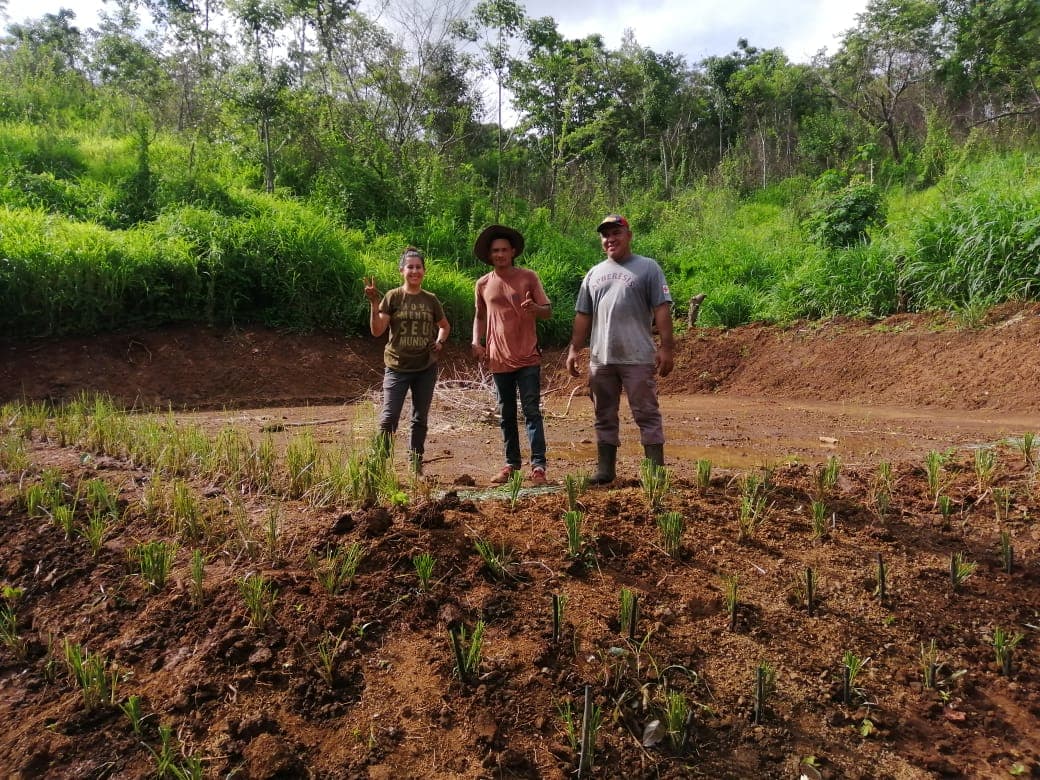
Vetiver for slope stabilization
Vetiver hedgerows can be part of shallow slope protection. Their roots and dense above-ground hedge can help manage runoff, retain surface sediment, and reinforce the planted strip when the system is correctly designed and maintained.
They are not a substitute for engineering on every slope. The first question is not “Can we plant vetiver?” but “What is moving, why, and what would failure affect?”
Start with the failure mode
Look for signs of deep movement, cracking, saturated ground, undercutting, damaged drainage, or threatened structures. Where a slide involves deep soil or rock movement, a retaining structure, a road, a bridge, a dam, or people downhill, seek qualified local engineering advice.
Vetiver may still have a supporting role, but it should not be presented as the sole solution.
Where a planted hedge is more plausible
On shallow, surface-erosion problems, contour-aligned hedges can slow runoff before it gains speed, catch sediment, and reduce the formation of small rills. The layout must follow the site’s water flow and be kept continuous; a gap can concentrate water rather than slow it.
Establishment is part of the design
Planting is only the start. Watering, weeding, protecting young plants, and filling gaps are essential during establishment. The Vetiver Planting Guide explains the practical questions to resolve before ordering slips.
Discuss a site responsibly
VSF can help partners frame a site assessment and distinguish a field-scale planting question from an engineering-risk question. Contact VSF to begin that conversation.